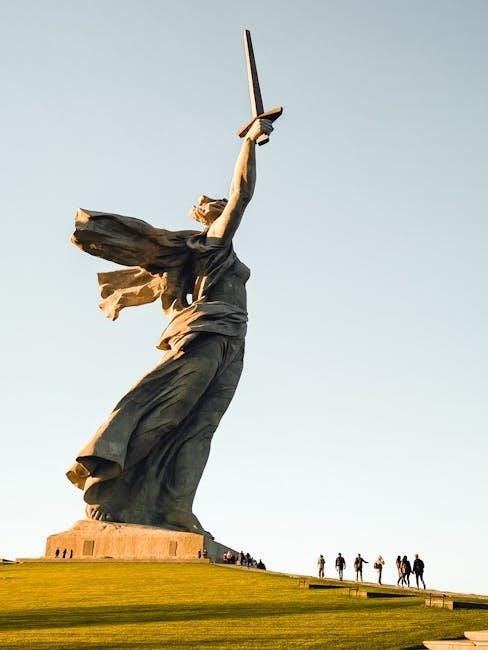
The Russian Revolution, born from the chaos of World War I, dramatically reshaped Russia and ignited global revolutionary fervor.
This period witnessed a complex interplay of long-term societal issues and the immediate pressures of wartime, fundamentally altering 20th-century history.
Contextualizing the Intertwined Histories
The war acted as a catalyst, exacerbating existing political, economic, and ethnic tensions within the Russian Empire, ultimately leading to its collapse.
The Scope of the Article
We will explore the pre-war conditions, the impact of WWI, the revolutions of 1917, the ensuing civil war, and the revolution’s lasting consequences.
Contextualizing the Intertwined Histories
The First World War wasn’t merely a backdrop to the Russian Revolution; it was intrinsically woven into its very fabric. Pre-existing discontent within the Russian Empire – stemming from autocratic rule, economic hardship, and ethnic tensions – found explosive release under the strain of total war. Russia’s disastrous military performance, coupled with immense economic disruption, fueled widespread unrest and eroded faith in the Tsarist regime.
The war amplified existing problems, transforming political dissent into open rebellion. Dissatisfaction even spread amongst moderate nobles due to reactionary policies. The conflict created a fertile ground for revolutionary ideologies, particularly Bolshevism, to take root and gain momentum. Ultimately, understanding the Revolution requires recognizing WWI as a pivotal, inseparable component.
The Scope of the Article
This article will provide a comprehensive overview of the tumultuous period encompassing World War I and the Russian Revolution, from 1914 to 1921. We will begin by examining the internal weaknesses of the pre-war Russian Empire, detailing the political autocracy, economic inequalities, and simmering ethnic conflicts. The focus will then shift to Russia’s involvement in WWI, analyzing its initial struggles and the escalating domestic crisis.
Further exploration will cover the February and October Revolutions, the subsequent withdrawal from the war via the Treaty of Brest-Litovsk, and the brutal Russian Civil War between Bolsheviks and the White Guard. Finally, we will assess the long-term consequences, including the establishment of the Soviet Union and its global impact;
The Pre-War Russian Empire: Seeds of Discontent
The Tsarist regime’s autocratic rule and reactionary policies fostered widespread dissatisfaction, even among the nobility, alongside growing unrest among ethnic minorities.
Political Landscape: Autocracy and Dissension
Tsarist policies, including dissolving the Duma, fueled opposition and highlighted the empire’s inherent political instability.
Economic Hardships and Social Inequality
Severe economic problems and vast social disparities created a fertile ground for revolutionary sentiment.
Ethnic Tensions within the Empire
Dominance by Russia intensified unrest among its diverse ethnic groups, contributing to the empire’s internal fragmentation.
Political Landscape: Autocracy and Dissension
The Russian Empire under Tsar Nicholas II was characterized by rigid autocracy, resisting meaningful political reform. Despite the concessions made during the 1905 Revolution – notably the establishment of the Duma, or parliament – the Tsar frequently undermined its authority, even dissolving it when it challenged his rule.
This consistent disregard for representative government fueled resentment among liberals, socialists, and other opposition groups. The political landscape was further complicated by a growing network of revolutionary organizations, advocating for radical change. Dissension permeated all levels of society, creating a volatile atmosphere ripe for upheaval, and demonstrating a fundamental disconnect between the ruling elite and the populace.
Economic Hardships and Social Inequality
Russia’s economy in the early 20th century was largely agrarian, with a vast peasantry burdened by land hunger and poverty. Industrialization, while occurring, was uneven and created harsh working conditions for a growing urban proletariat. Significant wealth was concentrated in the hands of a small aristocracy and emerging industrial elite, fostering extreme social inequality.
Economic problems grew, exacerbated by Russia’s involvement in World War I, leading to food shortages, inflation, and widespread hardship. This disparity fueled social unrest and discontent, creating a fertile ground for revolutionary ideologies promising economic justice and a more equitable distribution of resources.
Ethnic Tensions within the Empire
The Russian Empire encompassed a vast and diverse array of ethnic groups, many of whom faced discrimination and Russification policies. These policies aimed to suppress local cultures and languages, fostering resentment and a desire for autonomy or independence. National minorities, including Poles, Ukrainians, and those in the Caucasus, experienced political and economic marginalization.
Growing restiveness among these groups contributed to the instability of the empire, as they increasingly challenged Tsarist authority. World War I further inflamed these tensions, with ethnic minorities often being conscripted into the army and facing discrimination within the military.
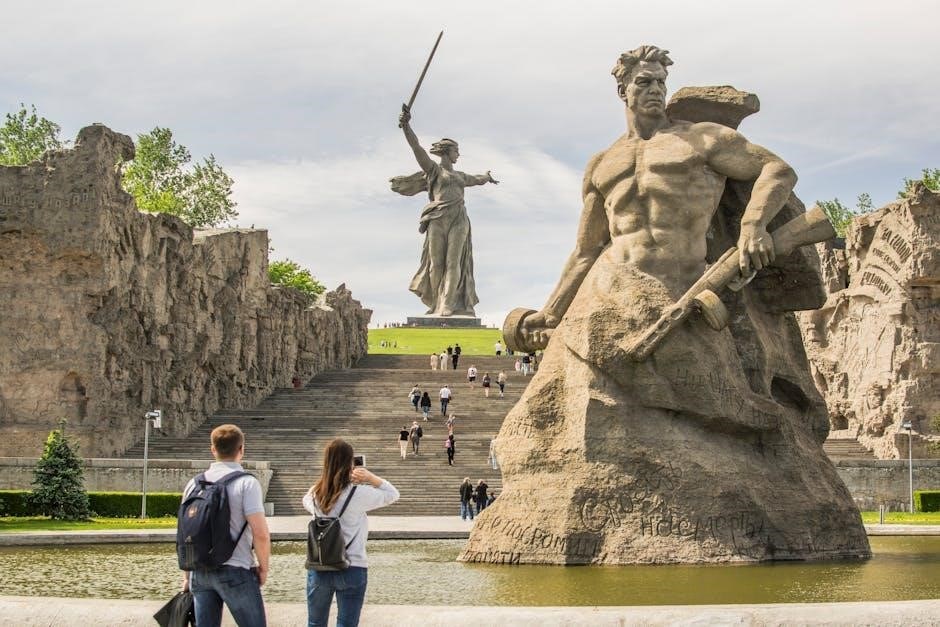
World War I: Russia’s Entry and Initial Struggles
Russia entered WWI with alliances, but faced immediate military failures and substantial losses on the Eastern Front, straining its economy and revealing systemic weaknesses.
Russia’s Alliances and Mobilization
Initial mobilization proved chaotic, exposing logistical shortcomings and a lack of modern equipment, hindering effective military operations from the outset.
Military Failures and Losses on the Eastern Front
Early battles resulted in devastating defeats, highlighting the inadequacies of the Russian army and eroding public confidence in the Tsarist regime.
The Strain on the Russian Economy During WWI
The war placed immense pressure on Russia’s fragile economy, leading to shortages, inflation, and widespread discontent among the population.
Russia’s Alliances and Mobilization
Russia’s commitment to its Triple Entente alliance with France and Great Britain propelled its entry into World War I in 1914. This alliance obligated Russia to defend Serbia against Austria-Hungary, triggering a chain reaction that escalated into a global conflict. However, Russia’s mobilization was plagued by significant challenges.
Logistical inadequacies and a vast, underdeveloped railway network hampered the swift deployment of troops. The initial mobilization order was poorly coordinated, leading to confusion and delays. Furthermore, the Russian army lacked sufficient modern weaponry and equipment, relying heavily on outdated technology. This unpreparedness significantly contributed to the early military setbacks experienced by Russia on the Eastern Front.
Military Failures and Losses on the Eastern Front
The Eastern Front witnessed a series of devastating defeats for Russia, exposing the weaknesses of the Tsarist military. Early engagements, such as the Battles of Tannenberg and the Masurian Lakes in 1914, resulted in catastrophic losses of men and material. Poor leadership, inadequate supplies, and a lack of effective strategy contributed to these failures.
Russian soldiers faced a better-equipped and more effectively commanded German army. Continuous retreats and mounting casualties eroded morale and fueled discontent within the ranks and among the population. These military setbacks not only inflicted immense human suffering but also severely undermined public confidence in the Tsar and his government, accelerating the path towards revolution.
The Strain on the Russian Economy During WWI
Russia’s participation in World War I placed an immense and unsustainable strain on its already fragile economy. The war effort demanded massive resource mobilization, diverting funds from vital sectors like agriculture and industry. Transportation networks, particularly the railways, were overwhelmed, leading to severe shortages of food, fuel, and essential supplies in cities.
Inflation soared as the government printed more money to finance the war, further eroding the purchasing power of ordinary citizens. These economic hardships fueled widespread discontent and unrest, contributing significantly to the growing revolutionary sentiment. The war exposed the deep-seated structural weaknesses of the Russian economy, hastening its collapse.
The February Revolution: Collapse of the Tsarist Regime
Widespread unrest, fueled by economic hardship and war failures, culminated in the February Revolution, forcing Tsar Nicholas II’s abdication and ending centuries of Romanov rule.
Economic Problems and Widespread Unrest
Severe shortages and inflation sparked strikes and protests, escalating into mass demonstrations in Petrograd, demanding bread and an end to the war.
The Role of the Duma and Political Opposition
The Duma formed a Provisional Government, attempting to establish a democratic system amidst the chaos, while socialist groups gained influence.
Economic Problems and Widespread Unrest
The Russian economy was severely strained by World War I, leading to immense hardship for the population. Food shortages became rampant in major cities like Petrograd, causing bread riots and widespread discontent. Inflation soared, diminishing the purchasing power of wages and exacerbating existing poverty.
Transportation systems collapsed under the weight of wartime demands, hindering the delivery of essential goods; Factories struggled to meet both military and civilian needs, resulting in unemployment and further economic instability. This economic turmoil fueled social unrest, creating a volatile atmosphere ripe for revolution.
The combination of these factors – scarcity, inflation, and unemployment – directly contributed to the growing opposition against the Tsarist regime.
The Role of the Duma and Political Opposition
The Duma, established after the 1905 Revolution, represented a limited form of representative government, yet Tsar Nicholas II frequently undermined its authority. Dissolving the Duma when it challenged his policies fueled resentment among liberal and moderate political factions.
Various opposition groups, including socialists, communists, and constitutional democrats, capitalized on growing discontent. They criticized the Tsar’s autocratic rule and the disastrous conduct of the war. These groups, though often fragmented, provided a platform for anti-government sentiment and mobilized public opinion.
The Duma’s ineffectiveness and the strength of the opposition contributed to the escalating crisis.
Abdication of Tsar Nicholas II and the Formation of the Provisional Government
Faced with widespread unrest and military defeats during World War I, Tsar Nicholas II’s authority crumbled in February 1917. Economic hardship and relentless social upheaval rendered his position untenable, forcing him to abdicate both for himself and his son.
This abdication marked the end of the Romanov dynasty’s three-century rule. A Provisional Government, largely composed of Duma representatives, was swiftly established to manage the country.
However, this new government faced immense challenges, including continuing the war and addressing the demands of the increasingly powerful Soviets.
The Provisional Government: A Period of Instability
The Provisional Government struggled with wartime continuation, growing disillusionment, and the emergence of competing power centers like the Soviets, creating a period of dual power.
Challenges Faced by the Provisional Government
The Provisional Government inherited immense difficulties following the Tsar’s abdication. Maintaining control amidst widespread social unrest and economic hardship proved incredibly challenging. Continuing Russia’s involvement in World War I fueled growing discontent, as military failures and economic strain intensified.
The government’s legitimacy was constantly questioned, particularly due to its inability to address land redistribution or immediately end the war. The rise of the Soviets, representing workers and soldiers, created a “dual power” situation, undermining the government’s authority.
Internal divisions within the government further hampered its ability to enact effective policies, leading to instability and a loss of public confidence.
Continuing War Efforts and Growing Disillusionment
Despite promises of change, the Provisional Government initially continued Russia’s participation in World War I, a decision that proved deeply unpopular. Military setbacks on the Eastern Front persisted, resulting in further losses and dwindling morale among soldiers. This relentless warfare exacerbated existing economic problems, leading to food shortages and widespread suffering for civilians.
Growing disillusionment with the war effort fueled strikes and protests, increasing social unrest. Soldiers began deserting the army in large numbers, and mutinies erupted, demonstrating a complete breakdown of discipline.
The government’s inability to secure a decisive victory or even offer a clear path to peace eroded public trust and strengthened opposition movements.
The Rise of Soviets and Dual Power
Alongside the Provisional Government, councils of workers’ and soldiers’ deputies – Soviets – emerged as powerful forces, particularly in Petrograd and other major cities. These Soviets, initially intended to supplement the government, quickly gained influence by representing the interests of the working class and soldiers.
This created a situation of “dual power,” where both the Provisional Government and the Soviets claimed legitimacy. The Soviets controlled key infrastructure and had the support of increasingly radicalized populations.
The Provisional Government’s authority was constantly challenged by the Soviets’ competing decrees and policies, leading to political instability and a weakening of central control.
The October Revolution: Bolshevik Seizure of Power
Led by Lenin, the Bolsheviks capitalized on widespread discontent, seizing power from the Provisional Government in October 1917.
This marked a pivotal shift, establishing Soviet rule and fundamentally altering Russia’s political landscape.
Lenin’s Return and the April Theses
Lenin’s return and his April Theses advocating “Peace, Land, and Bread” resonated with war-weary soldiers, peasants, and urban workers.
Bolshevik Propaganda and Growing Support
Effective propaganda and promises of immediate solutions fueled Bolshevik support, contrasting with the Provisional Government’s continued war involvement.
The Storming of the Winter Palace and Establishment of Soviet Rule
The symbolic storming of the Winter Palace signaled the Bolsheviks’ successful overthrow of the Provisional Government, establishing a Soviet government.
Lenin’s Return and the April Theses
Vladimir Lenin’s return to Russia in April 1917, facilitated by Germany hoping to destabilize Russia’s war effort, proved a turning point.
Upon arrival, he issued the “April Theses,” a radical departure from prevailing socialist thought.
These theses rejected cooperation with the Provisional Government, calling for an immediate end to the war, the redistribution of land to peasants, and transferring power to the soviets – councils of workers and soldiers.
This bold stance resonated with a population exhausted by war and yearning for fundamental change.
Lenin skillfully tapped into the widespread disillusionment, offering a clear and decisive alternative to the Provisional Government’s perceived failures.
His message of “Peace, Land, and Bread” became a powerful rallying cry, galvanizing support for the Bolshevik cause.
The April Theses laid the ideological groundwork for the October Revolution.
Bolshevik Propaganda and Growing Support
The Bolsheviks, under Lenin’s leadership, masterfully employed propaganda to cultivate support amongst war-weary soldiers, impoverished workers, and land-hungry peasants.
Their slogans – “Peace, Land, and Bread” and “All Power to the Soviets” – were simple, direct, and addressed the most pressing concerns of the Russian populace.
Newspapers like Pravda disseminated Bolshevik ideology, skillfully exploiting discontent with the Provisional Government’s continuation of the war.
They effectively portrayed themselves as champions of the people, contrasting sharply with the perceived elitism of other political factions.
This strategic messaging, coupled with organized agitation, steadily increased Bolshevik influence within the soviets.
By autumn 1917, the Bolsheviks had gained a majority in the Petrograd and Moscow Soviets, positioning them for a seizure of power.
The Storming of the Winter Palace and Establishment of Soviet Rule
On November 7, 1917 (October 25th according to the Julian calendar), Bolshevik forces initiated the seizure of key government buildings in Petrograd, culminating in the storming of the Winter Palace.
This symbolic act, though less dramatic than often portrayed, signaled the overthrow of the Provisional Government and the beginning of Soviet rule.
The relatively swift takeover was facilitated by a lack of significant resistance from remaining loyalist troops.
Immediately following the palace’s capture, the Second All-Russian Congress of Soviets convened and proclaimed a new Soviet government.
Lenin was elected chairman of the Council of People’s Commissars, effectively becoming the head of the new Bolshevik state.
Decrees on peace and land were issued, fulfilling key Bolshevik promises and solidifying their initial support.
Russia’s Withdrawal from World War I
Facing internal turmoil and Bolshevik opposition to the war, Russia exited WWI via the Treaty of Brest-Litovsk in March 1918.
The Treaty of Brest-Litovsk
This treaty imposed harsh terms, ceding vast territories to the Central Powers and significantly impacting the Allied war effort.
The Treaty of Brest-Litovsk
Signed in March 1918, the Treaty of Brest-Litovsk formally ended Russia’s participation in World War I, but at a tremendous cost. The Bolshevik government, prioritizing internal consolidation and seeking peace, accepted incredibly harsh terms dictated by Germany and the Central Powers.
Russia ceded vast territories, including Ukraine, Poland, and the Baltic states, representing approximately one-third of its population and agricultural land. This loss was devastating, both economically and strategically. The treaty sparked outrage among many Russians who viewed it as a national betrayal, while simultaneously allowing the Bolsheviks to focus on suppressing internal opposition and winning the ensuing Civil War.
For the Allied Powers, the treaty initially appeared advantageous, freeing up German troops from the Eastern Front. However, it ultimately strengthened Germany’s position and prolonged the conflict on the Western Front.
Territorial Losses and Consequences
The Treaty of Brest-Litovsk resulted in substantial territorial losses for Russia, fundamentally reshaping its geopolitical landscape. Approximately 34% of the former Russian Empire’s population, an estimated 80 million people, found themselves outside Soviet control. This included significant agricultural regions, vital industrial areas, and access to crucial ports.
These losses fueled resentment and contributed to the intensity of the Russian Civil War, as various factions fought to reclaim lost territories. The treaty also created numerous new states, or expanded existing ones, in Eastern Europe, altering the regional power balance. Economically, Russia suffered a severe blow, losing valuable resources and trade routes.
The treaty’s terms were later annulled by the Armistice of November 1918, but the initial impact was profound and long-lasting.
Impact on the Allied Powers
Russia’s withdrawal from World War I following the October Revolution significantly impacted the Allied Powers, creating both strategic and political challenges. Initially, the Allies had hoped for continued Russian participation on the Eastern Front, diverting German forces. Russia’s exit freed up substantial German troops for deployment to the Western Front, bolstering their offensive capabilities.
This shift necessitated a greater Allied commitment to maintain the war effort, straining their resources and manpower. Furthermore, the Bolshevik government’s denunciation of secret treaties and calls for a separate peace embarrassed the Allies and exposed their imperialistic ambitions.
The Allies responded by providing limited support to anti-Bolshevik forces during the Russian Civil War, hoping to reinstate a pro-Allied government, but this intervention proved largely unsuccessful.
The Russian Civil War: Bolsheviks vs. White Guard
Following the Bolshevik seizure of power, a brutal civil war erupted between the Bolshevik “Reds” and the anti-Bolshevik “Whites,”
with foreign powers intervening, prolonging the conflict and devastating the Russian landscape;
Formation of the Red and White Armies
The Bolsheviks, establishing the Red Army under Leon Trotsky, rapidly built a disciplined fighting force from former Tsarist soldiers and volunteers.
This army was fueled by ideological commitment and centralized control, becoming the core of the new Soviet state’s power.
Conversely, the “White” armies were a disparate collection of anti-Bolshevik forces
including monarchists, liberals, and disgruntled military officers, lacking unified leadership and a cohesive political program.
They received limited, often uncoordinated, support from Allied powers,
hindering their ability to effectively challenge the Red Army’s growing strength and organizational capacity throughout the conflict.
Foreign Intervention in the Civil War
Several Allied powers, including Britain, France, the United States, and Japan, intervened in the Russian Civil War, motivated by a complex mix of factors.
Concerns about the spread of Bolshevism, protecting Allied interests, and attempting to restore a government favorable to the continuation of the war effort drove their involvement.
However, this intervention was often hesitant, poorly coordinated, and lacked a clear strategic objective.
Limited resources and domestic opposition further hampered their efforts,
ultimately failing to significantly alter the course of the conflict and even bolstering Bolshevik propaganda about foreign interference.
The intervention proved largely ineffective and counterproductive.
Bolshevik Victory and Consolidation of Power
Despite facing numerous challenges, the Bolsheviks ultimately emerged victorious from the Russian Civil War, securing their control over much of the former Russian Empire.
Key factors contributing to their success included strong leadership under Lenin and Trotsky, a disciplined Red Army, and effective propaganda that appealed to widespread discontent.
The implementation of “War Communism,” though harsh, allowed the Bolsheviks to mobilize resources for the war effort.
Following the conflict, the Bolsheviks established a one-party state, suppressing opposition and consolidating their power.
This paved the way for the formation of the Soviet Union in 1922, fundamentally altering the political landscape of Eastern Europe.
Impact of WWI on the Russian Revolution
World War I served as a critical catalyst, intensifying Russia’s pre-existing issues and dramatically weakening the Tsarist regime, fueling revolutionary sentiment.
WWI as a Catalyst for Revolution
The war’s strain on the economy and military failures created widespread disillusionment, fostering unrest and ultimately contributing to the revolutions of 1917.
Exacerbation of Existing Problems
WWI worsened economic hardships, ethnic tensions, and political instability, accelerating the collapse of the autocratic Tsarist system.
Weakening of the Tsarist Regime
Military defeats and internal strife eroded public trust in Tsar Nicholas II, creating a power vacuum exploited by revolutionary forces.
WWI as a Catalyst for Revolution
The First World War fundamentally acted as the primary accelerant for the Russian Revolution, transforming existing vulnerabilities into a full-blown crisis. Russia’s disastrous involvement, marked by immense military losses and economic hardship, fueled widespread discontent among both soldiers and civilians.
Economic problems grew exponentially, exacerbated by the war’s demands, leading to food shortages and rampant inflation. This created significant social unrest, culminating in strikes and protests. The war exposed the incompetence and corruption within the Tsarist government, eroding public trust and fostering a climate ripe for revolution.
Ultimately, WWI didn’t cause the revolution, but it dramatically sped up its arrival, providing the necessary conditions for the overthrow of the Tsarist regime and the rise of revolutionary movements.
Exacerbation of Existing Problems
World War I didn’t create Russia’s problems, but it dramatically worsened pre-existing political, economic, and social issues. The Tsarist regime, already weakened by internal dissent and reactionary policies, struggled to manage the war effort, revealing deep systemic flaws.
Ethnic tensions within the empire intensified as the war placed further strain on resources and fueled nationalist sentiments among minority groups. Economic hardships, including food shortages and inflation, disproportionately affected the peasantry and working class, increasing social unrest.
The war exposed the government’s inability to address these issues, leading to widespread disillusionment and a loss of faith in the Tsar’s leadership, thus accelerating the path towards revolution.
Weakening of the Tsarist Regime
Russia’s involvement in World War I profoundly undermined the authority and legitimacy of the Tsarist autocracy. Military failures on the Eastern Front, coupled with immense casualties, eroded public confidence in Tsar Nicholas II’s leadership and strategic capabilities.
The Tsar’s decision to personally command the army directly linked him to the military defeats, making him a target for blame. Dissatisfaction spread even within the nobility, who had previously supported the regime, due to the Tsar’s inflexible policies and perceived incompetence.
This loss of prestige created a power vacuum, allowing alternative political forces, like the Duma and Soviets, to gain influence and challenge the Tsar’s absolute rule, ultimately paving the way for his abdication.
Long-Term Consequences of the Russian Revolution
The revolution birthed the Soviet Union, triggering profound social and economic shifts and reshaping global politics for decades to come.
Establishment of the Soviet Union
A new communist state emerged, fundamentally altering Russia’s political landscape and initiating a period of radical societal transformation.
Social and Economic Transformations
Land redistribution, nationalization of industries, and collectivization dramatically reshaped Russian society and its economic structure.
Global Impact of the Revolution
The revolution inspired communist movements worldwide, fueling ideological conflicts and influencing international relations throughout the 20th century.
Establishment of the Soviet Union
Following the tumultuous years of revolution and civil war, the Bolsheviks, under Lenin’s leadership, successfully consolidated power, leading to the formal establishment of the Soviet Union in 1922. This marked a radical departure from the centuries-old Tsarist autocracy, replacing it with a one-party communist state. The new government implemented a centralized political system, with the Communist Party exercising absolute control over all aspects of life.
This involved nationalizing industries, banks, and land, aiming to create a classless society based on socialist principles. The Soviet Union’s creation profoundly impacted the global political landscape, presenting a new ideological challenge to Western democracies and inspiring communist movements across the world. It represented a fundamental shift in power dynamics and set the stage for decades of geopolitical tension.
Global Impact of the Revolution
The Russian Revolution resonated far beyond Russia’s borders, profoundly influencing global politics and ideologies throughout the 20th century. It served as a potent symbol of anti-colonialism and inspired revolutionary movements in various parts of the world, particularly in Asia, Africa, and Latin America. The revolution’s success demonstrated the potential for overthrowing established power structures and fueled the growth of communist and socialist ideologies globally.
Furthermore, it instigated a period of intense ideological conflict – the Cold War – between the Soviet Union and the Western powers. This rivalry shaped international relations for decades, influencing everything from arms races to proxy wars and fundamentally altering the global geopolitical landscape.