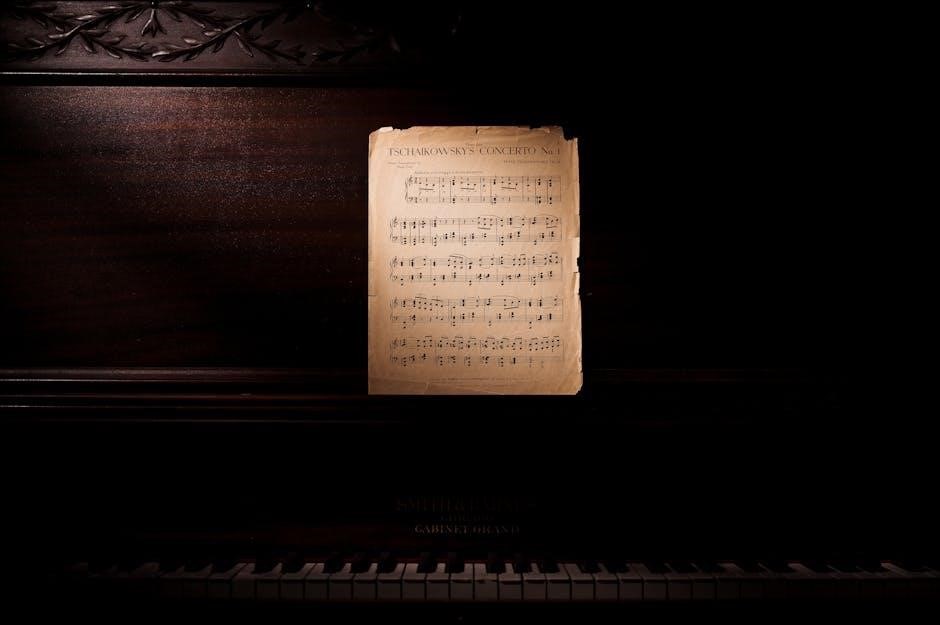
Discover a world of accessible music learning! Free beginner piano sheet music in PDF format‚ often including helpful notes‚ empowers aspiring pianists to begin their musical journey․
What is “Partition Piano” and Why Use PDFs?
“Partition Piano‚” a French term‚ directly translates to “piano sheet music․” It represents the written notation for playing the piano‚ detailing notes‚ rhythms‚ and other musical instructions․ Utilizing PDFs (Portable Document Format) for piano sheet music offers significant advantages for beginners․ PDFs are universally accessible across various devices – computers‚ tablets‚ and smartphones – without requiring specialized software․
Furthermore‚ free PDF sheet music is readily available online‚ providing a cost-effective way to build a repertoire․ The format ensures consistent formatting‚ regardless of the operating system․ PDFs are also easily printable‚ allowing for convenient practice away from a screen․ For novice players‚ the clarity and portability of PDF partitions are invaluable assets in their learning process․
Understanding Beginner Piano Levels
Beginner piano levels typically range from absolute beginner to early intermediate․ Absolute beginners focus on learning basic note reading‚ finger positioning‚ and simple rhythms‚ often utilizing music in C major or similar easy keys․ Level 1 sheet music usually features large notation and minimal complex chords․ As skills progress to Level 2‚ students encounter slightly more challenging rhythms and introductions to other keys․
Level 3 introduces basic chord progressions and more complex time signatures․ When searching for “partition piano gratuite pdf débutant avec notes‚” filter by level to ensure appropriate difficulty․ Starting with easier pieces builds confidence and prevents frustration․ Recognizing your current level is crucial for selecting suitable sheet music and maximizing learning efficiency․

Finding Free Piano Sheet Music Online
Numerous websites offer free piano sheet music in PDF format‚ catering to beginners․ Explore online resources to discover a vast library of accessible pieces․
Popular Websites for Free PDF Sheet Music
Many online platforms specialize in providing free piano sheet music‚ perfect for beginners seeking PDF downloads․ IMSLP (International Music Score Library Project) is a vast resource‚ though navigating it requires some familiarity․ Musicnotes․com offers a selection of free arrangements alongside paid options․
For specifically beginner-friendly material‚ 8notes․com and Free-scores․com are excellent starting points․ These sites often categorize music by skill level‚ making it easier to find appropriate pieces․ Websites like MuseScore․com allow users to upload and share their arrangements‚ creating a community-driven library․ Remember to always check the licensing and copyright information before downloading and using any sheet music․
Exploring these resources will unlock a wealth of musical possibilities for aspiring pianists!
Legal Considerations When Downloading Free Sheet Music
While abundant free sheet music exists‚ understanding copyright is crucial․ Many pieces remain under copyright‚ even if freely available online․ Public domain works – generally those by composers who died over 70 years ago – are safe to download and use without permission․
However‚ arrangements and editions of copyrighted works often require permission or payment․ Websites offering “free” music may operate under Creative Commons licenses‚ specifying usage rights․ Always check the license terms before downloading․
Respecting copyright protects composers and publishers․ Using sheet music illegally can lead to legal consequences․ Prioritize sources like IMSLP‚ which focuses on public domain scores‚ or ensure clear licensing terms are provided․

Reading Piano Sheet Music: A Beginner’s Guide
Unlock the language of music! Learning to read piano sheet music—staff‚ clefs‚ notes‚ and rhythms—is fundamental for playing and interpreting musical pieces․
Understanding the Staff‚ Clefs‚ and Notes
The musical staff consists of five horizontal lines and four spaces‚ providing the framework for notating pitch․ Clefs‚ placed at the beginning of the staff‚ define these lines and spaces․ The treble clef (often called the G clef) is used for higher-pitched notes‚ typically played with the right hand‚ while the bass clef (F clef) represents lower pitches for the left hand․
Notes are symbols representing musical sounds․ Their position on the staff determines their pitch․ Memorizing the notes on the lines and spaces – using mnemonics like “Every Good Boy Does Fine” for the treble clef lines – is crucial․ Note shapes indicate duration: whole‚ half‚ quarter‚ eighth‚ and sixteenth notes‚ each representing a different length of time․ Understanding these basics unlocks the ability to decipher and play written music․
Time Signatures and Key Signatures Explained
Time signatures‚ appearing at the beginning of a piece‚ indicate the rhythm․ The top number shows how many beats are in each measure (bar)‚ while the bottom number defines which note value receives one beat․ For example‚ 4/4 time means four quarter notes per measure․ Key signatures‚ using sharps or flats‚ indicate which notes are consistently raised or lowered throughout the piece․
These symbols simplify notation‚ avoiding repeated accidentals․ A key signature of one sharp indicates the key of G major or E minor․ Understanding time and key signatures is fundamental to interpreting the composer’s intended rhythm and harmonic context‚ enabling accurate and expressive playing․
Note Values and Rhythms for Beginners
Understanding note values is crucial for accurate rhythm․ Whole notes (longest) receive four beats‚ half notes two‚ quarter notes one‚ and eighth notes half a beat․ Rests indicate silence‚ with corresponding values to notes․ Rhythmic notation uses beams to group eighth and sixteenth notes‚ visually clarifying the beat divisions․
Beginners should practice counting aloud while playing‚ internalizing the duration of each note․ Dots increase a note’s value by half․ Ties connect notes of the same pitch‚ combining their durations․ Mastering these basics builds a solid rhythmic foundation for playing piano pieces with confidence and precision․

Essential Beginner Piano Pieces (Free PDF Options)
Explore simplified arrangements of classic melodies‚ children’s songs‚ and popular movie themes – readily available as free PDF sheet music for beginner pianists!
Simple Melodies and Children’s Songs
Beginners often find success starting with easily recognizable tunes․ Numerous websites offer free PDF sheet music for classic children’s songs like “Mary Had a Little Lamb‚” “Twinkle Twinkle Little Star‚” and “Hot Cross Buns․”
These pieces typically feature simple melodies‚ limited hand positions‚ and repetitive patterns‚ making them ideal for developing fundamental piano skills․ Look for arrangements specifically labeled for “beginners” or “easy piano․”
Many resources also include finger numbers directly on the sheet music‚ guiding correct hand placement․ Exploring these familiar melodies builds confidence and provides a rewarding early learning experience‚ fostering a love for playing the piano․ These are excellent starting points before tackling more complex compositions․
Classical Pieces Adapted for Beginners
Don’t let the term “classical” intimidate you! Many beloved classical melodies have been simplified and arranged for beginner piano players․ Websites specializing in free sheet music frequently offer these adaptations․
Expect to find easier versions of pieces by composers like Beethoven (Für Elise – a simplified section)‚ Mozart (Minuet in G Major)‚ and Bach (Minuet in G Minor)․ These arrangements often focus on the core melody‚ reducing complex harmonies and rhythms․
Searching for “beginner piano arrangements” alongside the composer’s name is a useful strategy․ These simplified versions provide a fantastic introduction to classical music while building essential piano technique and musicality․ They offer a rewarding challenge and broaden musical horizons․
Popular Movie Themes for Beginner Piano
Bring the magic of cinema to your piano practice! Numerous iconic movie themes are available in simplified arrangements perfect for beginners․ These pieces are often instantly recognizable and highly motivating to learn․
Look for arrangements of themes from films like “Harry Potter” (Hedwig’s Theme)‚ “Star Wars” (The Imperial March)‚ “Titanic” (My Heart Will Go On – simplified version)‚ and “The Lion King” (Circle of Life)․ Many websites offer free PDF sheet music specifically tailored for beginner skill levels․
These arrangements typically focus on the most memorable melodic lines‚ making them accessible while still capturing the essence of the original score․ Playing movie themes adds a fun and engaging element to your piano learning journey․
Tools and Software for Viewing and Printing PDFs
Access and utilize readily available PDF readers like Adobe Acrobat Reader or free alternatives to easily view‚ print‚ and manage your piano sheet music․
Recommended PDF Readers
Selecting the right PDF reader is crucial for a smooth learning experience․ Adobe Acrobat Reader remains the industry standard‚ offering robust viewing and printing capabilities‚ alongside annotation tools for marking your sheet music․ However‚ several excellent free alternatives exist․
Foxit Reader provides a lightweight and fast experience‚ ideal for older computers․ SumatraPDF is another minimalist option‚ known for its speed and portability․ PDF-XChange Editor‚ while offering a paid version‚ has a comprehensive free tier with advanced features like OCR (Optical Character Recognition)‚ useful for scanned sheet music․
Consider features like zoom functionality‚ page rotation‚ and the ability to add notes directly onto the PDF when making your choice․ Ensure compatibility with your operating system (Windows‚ macOS‚ Linux) for seamless integration․
Printing Sheet Music: Tips for Clarity and Legibility
Achieving clear‚ readable prints is vital for effective practice․ Before printing‚ carefully review your PDF reader’s settings․ Select “Fit to Page” to avoid cropping notes‚ but ensure the print remains large enough to read comfortably․ Experiment with grayscale printing to reduce ink consumption without sacrificing clarity․
High-resolution printing (300 DPI or higher) is recommended for sharp lines and notes․ Avoid “draft” or “economy” modes‚ as they can produce faint and blurry results․ Test print a single page before committing to the entire score․
Consider paper quality; heavier weight paper prevents bleed-through․ Finally‚ double-check that all essential markings‚ like dynamics and fingerings‚ are clearly visible in the printed output․

Practicing with Sheet Music: Effective Techniques
Maximize your learning! Start slowly‚ separate hands‚ and utilize a metronome for consistent rhythm․ Markings on your sheet music aid memorization and understanding․

Slow Practice and Hand Separation
Embarking on piano learning with free sheet music requires patience․ Begin by practicing very slowly – slower than you think necessary! This builds accuracy and muscle memory․
Crucially‚ separate your practice․ Work with your right hand alone until comfortable‚ then the left․ Combining hands too soon leads to frustration․ Focus on each hand’s individual part before merging them․
Consider sections․ Break down pieces into smaller‚ manageable segments․ Master each segment before connecting them․ Repetition at a slow tempo is key․ Gradually increase speed only when accuracy is consistent․ This methodical approach‚ combined with free PDF resources‚ fosters solid foundational skills․
Using a Metronome for Rhythm
Rhythm is paramount in piano playing․ A metronome is your best friend when utilizing free beginner sheet music! It provides a steady pulse‚ crucial for developing accurate timing․ Start with a slow tempo – one you can comfortably play the piece at without errors․
Initially‚ focus on playing simple rhythms with the metronome․ Gradually increase the complexity as your skills improve․ Don’t rush! Consistent‚ accurate practice at a slower tempo is far more beneficial than struggling through a fast pace․
Digital metronomes and apps are readily available․ Experiment with different time signatures and subdivisions to enhance your rhythmic understanding․ A solid rhythmic foundation‚ built with a metronome and free PDFs‚ will significantly accelerate your progress․
Marking Your Sheet Music for Easier Learning
Enhance your learning process by actively marking your free beginner piano sheet music (PDFs)! Use a pencil to highlight tricky sections‚ fingerings‚ or dynamics․ Circle accidentals (sharps‚ flats‚ naturals) to remind yourself of key changes․
Consider adding reminders for repeats‚ codas‚ or other musical instructions․ Color-coding can be incredibly helpful – perhaps highlighting left-hand and right-hand parts differently; Don’t be afraid to write in note names if you’re struggling with note reading․
These annotations transform static sheet music into a personalized learning tool․ Regularly reviewing and updating your markings reinforces your understanding and accelerates memorization‚ maximizing the benefit of free resources․

Advanced Search Techniques for Specific Pieces
Refine your searches using precise keywords like “beginner‚” “easy‚” and the composer’s name․ Explore genre filters for targeted free piano sheet music PDFs․
Using Keywords and Filters
Mastering search engines is crucial for finding the perfect free beginner piano sheet music․ Begin with broad terms like “piano sheet music PDF‚” then narrow your focus․ Combine keywords such as “beginner‚” “easy‚” “simple‚” and “children’s songs” to refine results․
Specifically‚ include terms like “partition piano gratuite pdf débutant” (French for free beginner piano sheet music) if searching across international sites․ Utilize filters available on many sheet music websites․ These often include options to sort by level (beginner‚ intermediate‚ advanced)‚ genre (classical‚ pop‚ movie themes)‚ and instrument (piano‚ keyboard)․
Don’t hesitate to experiment with different keyword combinations and filter settings to uncover a wider range of suitable pieces․ Boolean operators (AND‚ OR‚ NOT) can also enhance your search precision․
Searching by Composer or Genre
Refine your search for free beginner piano sheet music by specifying composers or musical genres․ If you enjoy classical music‚ search for “Bach beginner piano PDF” or “Mozart easy piano sheet music․” For popular tunes‚ try “beginner piano pop songs PDF” or specific artist names․
Exploring by genre opens up diverse options․ Consider “children’s songs piano sheet music PDF‚” “movie themes beginner piano‚” or “Christmas carols piano PDF․” Remember to include “partition piano gratuite pdf débutant” in your searches when exploring French-language resources․
Many websites categorize sheet music‚ allowing you to browse by composer‚ period‚ or style․ This targeted approach significantly increases your chances of finding pieces that align with your musical preferences and skill level․
Troubleshooting Common Issues with PDF Sheet Music
Address potential problems like illegible scans or formatting errors․ Adjust PDF viewer settings for optimal clarity when accessing free beginner piano PDFs․
Dealing with Poorly Scanned or Illegible PDFs
Encountering blurry or distorted free piano sheet music PDFs is common․ First‚ try adjusting your PDF reader’s display settings – increase zoom‚ adjust contrast‚ or enable image sharpening features․ Some readers offer tools to deskew or rotate pages․ If the scan is fundamentally poor‚ consider searching for alternative versions of the same piece from different websites․
Optical Character Recognition (OCR) software can sometimes convert scanned images into editable text‚ improving readability‚ though accuracy isn’t guaranteed․ Be prepared to manually correct errors․ Finally‚ remember that supporting creators by purchasing professionally typeset sheet music often yields a far superior experience‚ avoiding these issues altogether․
Adjusting PDF Settings for Optimal Viewing
Maximize your viewing experience with PDF settings! Most readers allow page layout adjustments – choose “Single Page” or “Continuous” depending on preference․ Zoom controls are crucial; experiment to find a comfortable size for reading notes clearly․ Explore color settings; sometimes inverting colors can reduce eye strain․
Disable “Reflow Text” as it disrupts musical notation․ Utilize the “Hand Tool” for easy navigation․ If the PDF has bookmarks‚ use them to jump to specific sections․ Consider enabling “Fast Web View” for quicker loading․ Regularly update your PDF reader for the latest features and bug fixes‚ ensuring optimal performance and clarity․