
Handel’s Messiah: A Comprehensive Guide to Finding and Using PDF Scores
Navigating the world of Handel’s Messiah PDFs requires understanding conjugations, verb tenses, and accessing resources for performers, analysis, and historical context.
What is Handel’s Messiah?
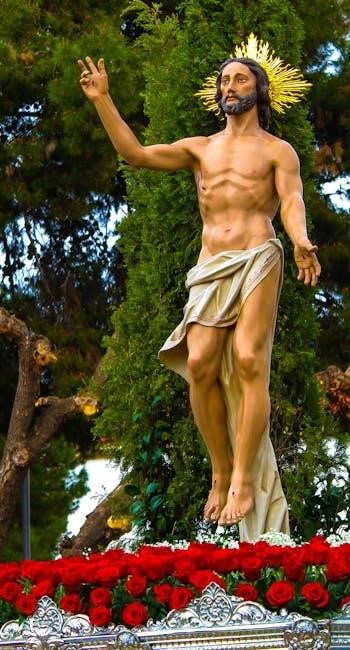
Handel’s Messiah, formally known as Messiah: A Sacred Oratorio, is a large-scale musical work composed in 1741 by George Frideric Handel. Unlike an opera, it doesn’t tell a specific story through dramatic action; instead, it presents a narrative of Jesus Christ’s life, death, and resurrection through biblical texts. The libretto, compiled by Charles Jennens, draws entirely from the King James Bible and the Book of Common Prayer.

The oratorio is structured in three parts: the Prophecies of Christ’s coming, His suffering and death, and His resurrection and reign. It’s renowned for its iconic “Hallelujah” chorus, a piece instantly recognizable even to those unfamiliar with classical music.
Understanding the work’s context is crucial when exploring Messiah PDF scores. These digital versions allow detailed study of Handel’s composition, offering insights into harmonic structures and orchestration, vital for performers and scholars alike. The availability of PDFs facilitates access to this monumental work;
Historical Context of the Messiah

Composed in Dublin, Ireland, in just 24 days during the summer of 1741, Messiah arose from a period of Handel’s life marked by financial difficulties and declining popularity in London. He accepted an invitation from Lord Lieutenant William Cavendish to perform in Dublin to revitalize his career. The city’s musical scene was thriving, and Handel found a receptive audience.
The initial performance on April 13, 1742, was a resounding success, raising significant funds for charitable institutions – a practice Handel continued throughout subsequent performances. The work’s focus on biblical texts resonated deeply with the religious sensibilities of the time.
Accessing Messiah through PDF scores allows modern audiences to connect with this historical moment. Studying these digital editions reveals the musical landscape of the 18th century, offering insights into performance practices and the evolution of Handel’s compositional style. PDFs preserve the historical integrity of the work.
The Original Manuscript and Early Editions
Handel’s original Messiah manuscript, meticulously handwritten, resides in the British Library. It showcases his compositional process, including corrections and annotations. Early printed editions, appearing shortly after the Dublin premiere, varied considerably. These weren’t standardized; publishers often took liberties with ornamentation and vocal arrangements.
PDFs of facsimiles of these early editions offer invaluable insights into the work’s initial reception and performance practices. Comparing different early editions, accessible digitally, reveals discrepancies in scoring and textual presentation. Understanding these variations is crucial for informed performance decisions.
Modern digital scholarship increasingly focuses on reconstructing the earliest authentic versions. High-resolution PDF scans of the manuscript and early prints facilitate detailed analysis. These digital resources allow researchers and performers to engage directly with the historical sources, bypassing interpretive layers found in later editions. Accessing these PDFs is vital for historical accuracy.

Finding Messiah PDF Scores Online
Locating Messiah PDFs involves exploring reputable websites, considering copyright, and discerning between free resources and paid, high-quality digital scores for study.
Reputable Sources for Free PDF Scores
Discovering free, legal Messiah PDF scores requires careful navigation. The International Music Score Library Project (IMSLP), also known as Petrucci Music Library, stands as a cornerstone resource. It offers a vast collection of public domain scores, including various editions of Handel’s masterpiece, meticulously cataloged and readily available for download.
Choral Public Domain Library (CPDL) is another invaluable source, specializing in choral music and providing numerous Messiah vocal scores and orchestral parts. These sites generally feature scores that are either out of copyright or have been released under open licenses.
However, users should always verify the legitimacy of the source and be mindful of potential copyright restrictions, especially with newer editions or arrangements. While these platforms offer a wealth of material, quality can vary, so previewing the score before committing to a performance or study is advisable. Remember to respect the intellectual property rights of composers and publishers.
Paid Options for High-Quality Messiah PDFs
For performers and scholars seeking premium quality, several commercial vendors offer meticulously prepared Messiah PDF scores. Musicnotes.com provides officially licensed digital sheet music, including various arrangements and editions of Handel’s work, often with accompanying audio files. Sheet Music Plus is another prominent retailer, boasting an extensive catalog and diverse options to suit different ensemble sizes and skill levels.
JW Pepper & Son, a well-respected name in choral music, offers high-quality choral scores and orchestral parts, frequently including performance tracks and rehearsal aids. These paid resources typically guarantee accuracy, clear engraving, and adherence to copyright regulations.
Investing in these PDFs ensures access to reliable editions, often with detailed editorial markings and performance suggestions. While free options exist, the enhanced clarity and accuracy of paid scores can significantly benefit serious musicians and conductors, justifying the expense for professional use.
Copyright Considerations When Downloading PDFs
Downloading Messiah PDF scores necessitates careful attention to copyright law. Handel’s work, while in the public domain due to its age, often exists in editions with specific copyright protections applied by publishers and editors. Unauthorized reproduction or distribution of copyrighted arrangements constitutes infringement.
Many free PDF scores available online may be illegally distributed copies, potentially exposing users to legal risks. Always verify the source’s legitimacy and licensing terms before downloading. Reputable websites clearly indicate copyright status and usage permissions.

Purchasing scores from authorized vendors guarantees legal access and supports the composers, editors, and publishers who contribute to music preservation. Respecting copyright fosters a sustainable ecosystem for musical creation and ensures continued access to high-quality scores for future generations. Be mindful and choose legal avenues for obtaining your Messiah PDFs.

Understanding Different Messiah PDF Versions
Distinguishing between full scores, vocal scores, Urtext editions, and edited versions is crucial for informed study and performance of Handel’s Messiah.
Full Score vs. Vocal Score
The primary distinction between a Messiah full score and a vocal score lies in their content and intended users. A full score presents all instrumental and vocal parts, offering a complete orchestral and choral layout. This is essential for conductors studying orchestration, harmonic structures, and the interplay between voices and instruments. It’s a comprehensive view of Handel’s compositional intent.
Conversely, a vocal score typically includes only the vocal parts (soprano, alto, tenor, bass, and chorus) with a reduced piano accompaniment. This format is designed for singers, choral societies, and those focusing on the melodic and textual aspects of the work. The piano reduction, while not replicating the full orchestral sound, provides harmonic support for rehearsals and smaller performances.
Choosing between the two depends on your needs. Conductors and orchestrators require the full score, while singers and choral directors often prefer the practicality of a vocal score. Understanding this difference is fundamental when navigating Messiah PDF resources.
Urtext Editions vs. Edited Editions
When exploring Messiah PDF scores, encountering “Urtext” and “Edited” editions is common. An Urtext edition strives for the closest possible representation of the composer’s original manuscript. It minimizes editorial intervention, presenting Handel’s notation with minimal additions like dynamics, phrasing, or articulation markings not found in the source. These editions prioritize historical accuracy and are favored by scholars and performers seeking an authentic interpretation.
Edited editions, conversely, incorporate editorial decisions to aid performance and clarity. This might include adding dynamics, phrasing, realizing figured bass, or correcting perceived errors. While helpful for many performers, these additions represent interpretations about Handel’s music, not necessarily Handel himself.
The choice depends on your approach. If you desire a pristine, scholarly experience, an Urtext PDF is ideal. If you prefer a score with guidance and interpretive suggestions, an edited edition might be more suitable. Always check the editor’s preface to understand the editorial philosophy.
Choir/Orchestra Specific PDFs
Finding Messiah PDF scores tailored to specific ensembles – choir, orchestra, or individual instrumentalists – significantly streamlines preparation. Full scores present the complete orchestral and choral arrangement, ideal for conductors and those studying the work’s overall structure. However, they can be visually complex.
Choir-only PDFs extract the vocal parts, simplifying rehearsal for choral societies. These often include piano reduction for accompaniment. Orchestral PDFs isolate instrumental parts, beneficial for sectional rehearsals or individual practice. Within orchestral sets, you’ll find PDFs for specific instruments (e.g., violin I, cello, trumpet).
When searching, specify your ensemble type in your query (e.g., “Handel Messiah choir PDF,” “Handel Messiah trumpet part PDF”). Reputable sources often categorize scores by instrumentation. Be mindful of the edition – Urtext or edited – when selecting PDFs, ensuring consistency within your ensemble. Carefully verify the instrumentation matches your group’s setup.
Using Messiah PDF Scores Effectively
Optimizing your workflow with appropriate software, printing strategies, and understanding Handel’s notation unlocks the full potential of these digital Messiah scores.
Software for Viewing and Annotating PDFs
Selecting the right PDF software is crucial for effectively working with Messiah scores. Adobe Acrobat Reader DC remains a popular, free option for basic viewing and annotation. However, for more advanced features, consider alternatives like PDF Expert, Foxit PDF Editor, or even dedicated music notation software that supports PDF import, such as MuseScore or Sibelius.
Annotation tools are invaluable for marking dynamics, phrasing, and vocal parts. Look for software allowing highlighting, sticky notes, and drawing directly onto the score. Some programs offer optical music recognition (OMR) capabilities, potentially converting the PDF into editable notation, though accuracy can vary.
Consider software compatibility with your operating system and storage capacity, especially for large orchestral scores. Cloud-based solutions like Google Drive or Dropbox can facilitate access across multiple devices. Experiment with different programs to find one that best suits your workflow and analytical needs when studying Handel’s masterpiece.
Printing Considerations for Large Scores
Printing a full orchestral score of Messiah from a PDF presents unique challenges. Standard letter-size paper is impractical; consider large-format printing (e.g., 11×17 inches) to maintain readability. Ensure your printer supports the chosen paper size and weight – heavier paper stock prevents bleed-through and enhances durability.
PDF scaling is critical. Verify the print settings to avoid compression or distortion of the notation. Test print a small section first to confirm accurate sizing and legibility. Black and white printing can save ink, but may obscure subtle dynamic markings.
Binding is another factor. Spiral binding allows the score to lay flat, simplifying page turns during rehearsal or performance. Alternatively, consider professional binding services for a more polished and durable result. Careful planning minimizes printing costs and ensures a usable score for study and performance of Handel’s work.
Tips for Reading Handel’s Notation
Handel’s notation, while generally clear, presents some nuances for modern readers. Be aware of his use of figured bass – numbers beneath the bass line indicate implied harmonies for keyboard realization. Understanding these figures is crucial for accurate performance practice.
Ornamentation is frequent. Trills, mordents, and appoggiaturas were common, but their exact execution can be debated. Research historical performance practice to inform your interpretation. Pay close attention to slurs and phrasing marks, as they significantly impact the musical line.
Handel often omitted dynamic markings; dynamics are largely implied through the texture and harmonic context. When studying a Messiah PDF, carefully examine the vocal lines and instrumental interplay. Familiarity with Baroque conventions will unlock a deeper understanding of the score’s expressive intent.

Messiah PDF Resources for Performers
Performers benefit from Messiah PDFs paired with accompaniment tracks, vocal learning tools, and insights into historical performance practices for authentic renditions.
Accompaniment Tracks and MIDI Files
For performers practicing independently, or ensembles lacking a full orchestra, accompaniment tracks and MIDI files derived from Messiah PDF scores are invaluable resources. These digital tools allow singers and instrumentalists to rehearse with a simulated orchestral backing, aiding in timing, intonation, and overall musicality.
Numerous websites offer downloadable accompaniment tracks, often available in various formats (MP3, WAV). MIDI files, representing the musical notation in a digital format, provide even greater flexibility. Performers can adjust tempos, transpose keys, and even isolate individual instrumental parts using MIDI editing software.
However, it’s crucial to verify the quality and accuracy of these files. Some free resources may contain errors or incomplete arrangements. Paid options generally offer higher fidelity and more reliable transcriptions based on authoritative Messiah PDF editions. When utilizing these resources, always cross-reference with a reputable full score PDF to ensure musical integrity and adherence to Handel’s original intentions.
Vocal Learning Resources Based on PDFs
Utilizing Messiah PDF scores unlocks a wealth of vocal learning resources. Beyond simply reading the notes, singers can benefit from tools designed to aid in memorization, pronunciation, and stylistic interpretation. Many websites now offer interactive PDFs where users can highlight vocal lines, add annotations regarding phrasing, and mark difficult passages.
Furthermore, PDFs facilitate the creation of practice tracks. Singers can isolate their vocal part from a full score PDF using music notation software, generating a backing track for focused rehearsal. Online platforms also provide vocal guides and recordings aligned with specific PDF editions, offering models for ornamentation and articulation.
Exploring different editions of the score in PDF format can reveal textual variations and historical performance practices. Careful study of the vocal lines within these PDFs, combined with supplementary resources, empowers singers to deliver informed and expressive performances of Handel’s masterpiece.
Historical Performance Practice Information
Examining Messiah PDF scores alongside historical performance practice (HPP) research provides invaluable insights. Early editions, often available as PDFs, reveal details about ornamentation, tempo, and vocal styles prevalent during Handel’s time. These scores frequently lack the detailed dynamic and articulation markings common in modern editions, suggesting a greater reliance on improvisational practices;
PDFs of original manuscripts and early printed editions allow comparison with contemporary accounts of performances. Studying these sources illuminates the intended vocal techniques – for example, the use of ornamentation, the role of the basso continuo, and the expected size of the chorus.
Accessing scholarly articles and treatises on HPP, often linked or referenced alongside online PDF score collections, further enriches understanding. This contextual knowledge, derived from PDF analysis and related research, informs historically informed performances of Messiah, striving for authenticity and stylistic nuance.

Advanced Messiah PDF Exploration
Delving into Messiah PDFs unlocks harmonic analysis, orchestration studies, and textual comparisons, revealing compositional intricacies and editorial variations within the score.
Analyzing Harmonic Structures in the PDF
Utilizing a Messiah PDF allows for detailed harmonic analysis, revealing Handel’s masterful command of Baroque counterpoint and chord progressions. Examining the full score PDF facilitates tracing modulations, identifying key relationships, and understanding the dramatic impact of harmonic shifts.
Focus on recurring harmonic patterns, such as sequences and pedal points, and how they contribute to the overall emotional arc of each chorus and aria. Pay attention to Handel’s use of dissonance and resolution, and how these elements create tension and release. The PDF format enables zooming and detailed inspection of individual chords and voice leading.
Consider analyzing specific sections, like the “Hallelujah” chorus, to dissect its harmonic complexity. Look for instances of deceptive cadences, secondary dominants, and borrowed chords. Comparing different PDF editions – Urtext versus edited – can reveal variations in harmonic interpretation and editorial choices. This deep dive into the harmonic language enhances appreciation for Handel’s genius and compositional technique.
Studying Orchestration from the Full Score PDF
The full score Messiah PDF provides an invaluable resource for studying Handel’s orchestration techniques. Analyzing the PDF reveals his skillful deployment of strings, oboes, bassoons, trumpets, and timpani to create textural variety and dramatic effect. Observe how Handel utilizes instrumental combinations to highlight vocal lines and underscore textual meaning.
Examine the use of doubling – where vocal parts are reinforced by instruments – and how this impacts the overall sonic weight. Note the interplay between the different instrumental groups, and how Handel creates dialogue and contrast. The PDF format allows for close inspection of individual instrumental parts, revealing details about articulation, dynamics, and phrasing.
Consider how Handel employs the basso continuo – typically cello, bassoon, and harpsichord – to provide harmonic support and rhythmic drive. Comparing different PDF editions can illuminate editorial decisions regarding instrumentation and dynamics. This detailed study of the full score PDF deepens understanding of Handel’s orchestral artistry.
Researching Textual Variations in Different PDFs
Examining multiple Messiah PDF versions reveals fascinating textual variations arising from editorial choices and the evolution of performance practice. Different editions may present alternative readings of the biblical texts set by Handel, impacting the overall interpretation. Comparing these PDFs highlights the challenges of reconstructing Handel’s original intentions.
Focus on discrepancies in ornamentation, dynamics, and phrasing. Some PDFs might include editorial suggestions for articulation or tempo, while others adhere more strictly to the Urtext. Analyzing these differences illuminates the interpretive decisions made by editors and performers over time. Consider the impact of these variations on the expressive character of the work.
Investigate the source material used for each PDF – whether it’s based on early printed editions or manuscript sources. Understanding the provenance of each version provides crucial context for evaluating its reliability and accuracy. This comparative textual analysis enhances appreciation for the complexities of Messiah’s transmission.